 Prabhakar Jha
Kathmandu was not invited to the BRICS meeting in New Delhi. It also never asked to be. The more revealing question is why Nepal has courted one Eurasian club for nineteen years and never once approached the other.
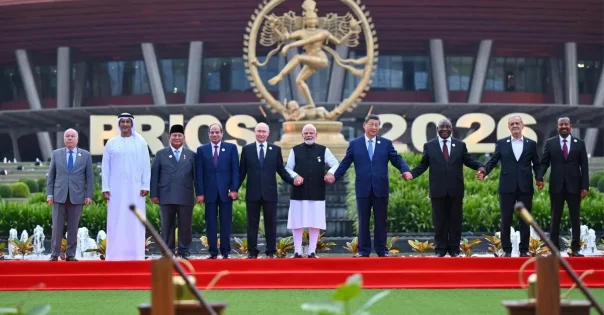
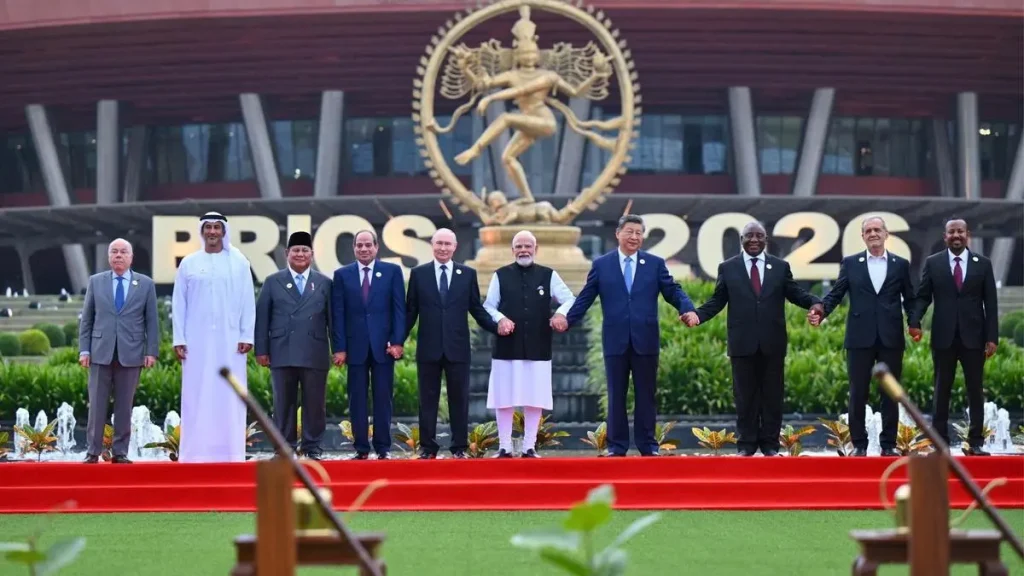
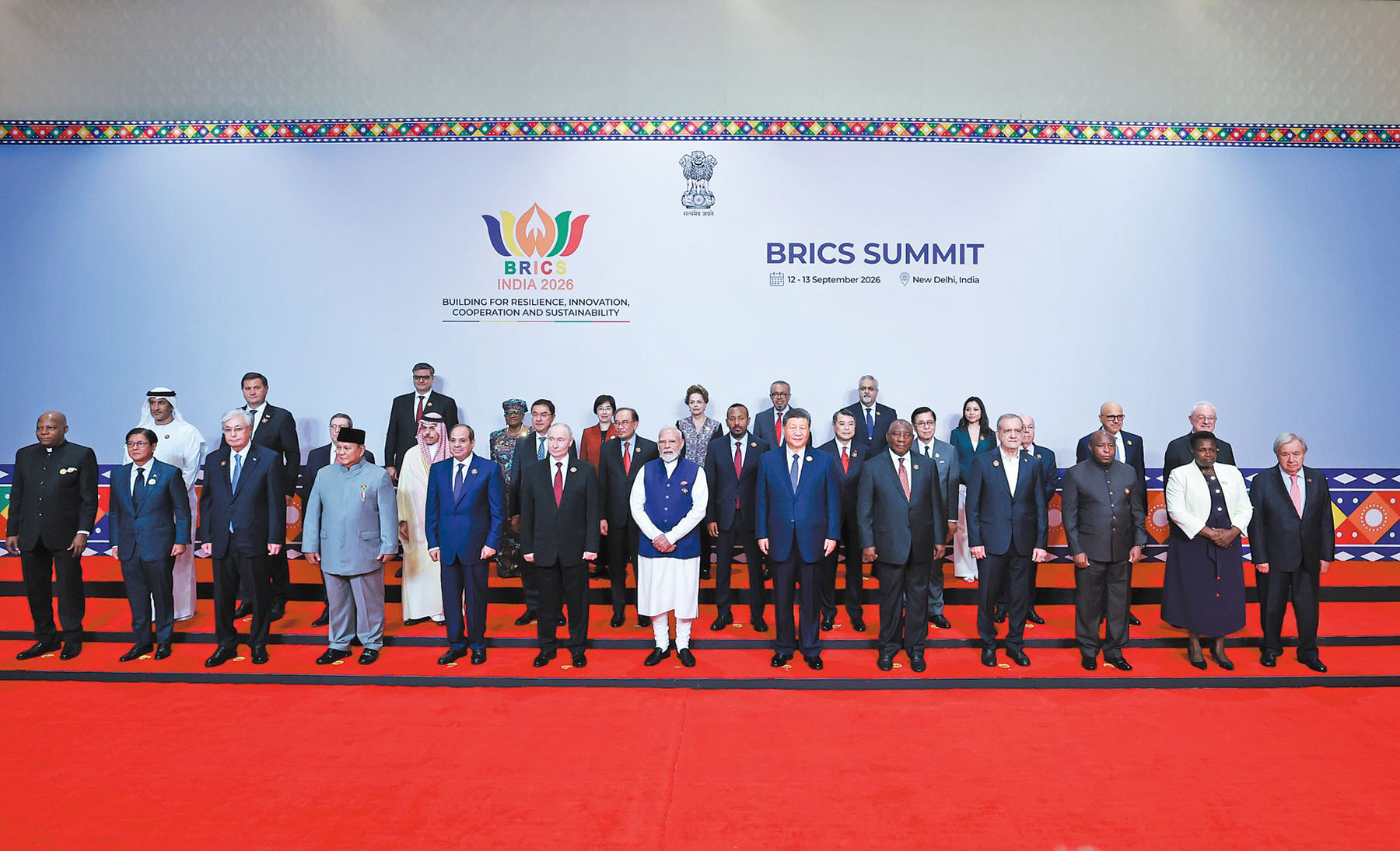
On the morning of 13 September 2026, the leaders of eleven BRICS members gathered at Bharat Mandapam in New Delhi with ten partner countries and a handful of invited guests for the summit’s open plenary. The theme was “Resilience, Innovation, Cooperation and Sustainability: Shaping the Future for Inclusive Global Growth”. The New Delhi Declaration adopted over those two days ran to roughly 140 paragraphs. Among them were calls for stronger national disaster-risk reduction systems, improved early-warning mechanisms and greater access to financing for resilient infrastructure, along with new guidelines on disaster-management data integration. The summit also expanded a BRICS remote-sensing satellite constellation intended partly for disaster risk reduction and climate monitoring.
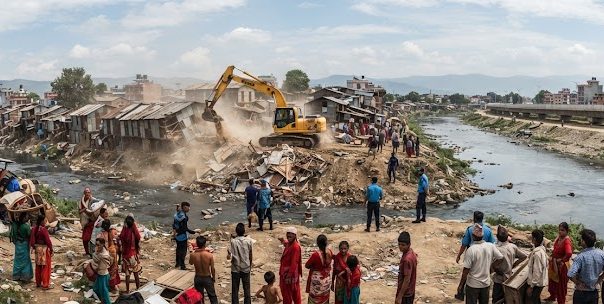
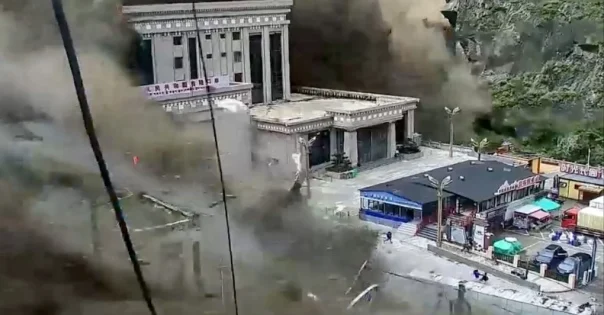
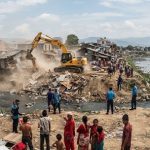
Eighteen days earlier and roughly 120 kilometres to the north, a glacier-linked collapse on the Tibetan side of the border had sent a wall of water and debris down the Bhotekoshi into Nepal’s Rasuwa district, then along the Trishuli. It destroyed the Gyirong port facility on the China-Nepal frontier and struck settlements along a 72-kilometre stretch of river. Official death tolls climbed past 1,300 within a fortnight and have continued to rise, with thousands still unaccounted for. A Rapid Damage and Needs Assessment by the National Planning Commission and the National Disaster Risk Reduction and Management Authority put recovery needs at Rs 723.31 billion, with Rs 473.57 billion for infrastructure alone, after thirteen hydropower projects totalling 759 megawatts and five solar plants were affected.
A grouping that accounts for close to half the world’s population met in Nepal’s immediate neighbourhood to discuss transboundary disaster data, climate finance and resilient infrastructure, weeks after Nepal suffered a transboundary disaster of exactly that character. Nepal was not in the room. Nor, so far as the public record shows, had it asked to be.
Correcting the premise
The framing that has dominated Kathmandu’s commentary since 13 September, that Nepal “missed” the summit, does not survive contact with the facts. Missing something implies an opportunity that existed and was forgone. Nepal is not a BRICS member. It is not one of the ten partner countries admitted through the tier created at Kazan in 2024 and confirmed at Rio in 2025. That list runs Belarus, Bolivia, Cuba, Kazakhstan, Malaysia, Nigeria, Thailand, Uganda, Uzbekistan and Vietnam. Nepal has never applied to join it. It received no outreach invitation from India, and no formal Nepali request for one has been made public.
The analytical question the original framing gestures at is still worth asking, but it must be posed correctly. It is not whether Nepal suffered a diplomatic defeat in New Delhi. It is what a small state’s pattern of institutional engagement tells us about how it decides which emerging bodies to join, at which tier, and at what price.
Why the guest list looked different from Goa
Comparisons with 2016 are being made carelessly. At the eighth BRICS summit in Goa, India convened a BRICS-BIMSTEC outreach segment, and Nepal participated through then Prime Minister Pushpa Kamal Dahal. Nepal’s presence there was a function of category rather than of bilateral warmth: India had chosen to invite an entire regional grouping of which Nepal happened to be a member.
New Delhi made a different choice in 2026. It did not reconvene a BIMSTEC-wide format. The one South Asian non-member publicly identified as an outreach invitee was Bangladesh, and it was invited in a specific institutional capacity, as the current chair of BIMSTEC. Dhaka declined, with Bangladeshi authorities noting late in the process that Tarique Rahman had been invited as BIMSTEC chair rather than as prime minister.
This detail matters more than the indignation it has generated. BRICS outreach practice has tended to favour functional criteria, notably the chairmanships of regional organisations, over bilateral proximity. Nepal does hold a regional chairmanship. It has chaired the South Asian Association for Regional Cooperation since hosting the 18th SAARC Summit in Kathmandu in November 2014, a tenure now approaching twelve years without a single successor summit. A chairmanship of a body that has not met is not a credential. It is a reminder.
So, one answer to “why was Nepal not invited” is almost administrative: in an outreach format keyed to institutional roles, Nepal’s only relevant role is custodianship of a dormant organisation. That is an unsatisfying answer, but it is closer to the evidence than the charge, advanced by several Nepali politicians in the days after the summit, that the omission was retaliation for the current government’s conduct. Those claims, including opposition allegations about refused meetings and mishandled disaster diplomacy reported by Republica on 14 September, remain unverified. Neither government has published a reason.
The asymmetry that actually needs explaining
Here is the fact that should trouble anyone arguing that Nepal has kept a principled distance from non-Western institutions.
Nepal has spent nearly two decades trying to get into the Shanghai Cooperation Organisation. According to the Ministry of Foreign Affairs, Nepal applied for SCO dialogue-partner status in 2007 and again in 2015, was granted it at the Ufa summit of July 2015, and formalised it by memorandum signed in Beijing on 22 March 2016 by Foreign Secretary Shanker Das Bairagi and SCO Secretary-General Rashid Alimov. The memorandum covers trade, transit and investment, energy, security, customs, transport, science and technology, among other areas. Nepal has since sought, more than once, to upgrade that status.
A country that petitioned a Eurasian security and economic organisation across two decades, through multiple governments of different ideological complexions, cannot plausibly be described as strategically distant from the alternative institutional order. Nepal’s revealed behaviour is the opposite of aloof. It is acquisitive about affiliate status, provided someone in Singha Durbar has a file open and a procedure to follow.
The SCO published an affiliate ladder with an application route. BRICS created its partner tier only in October 2024, without an equivalent public procedure, and admission requires the consensus of all eleven members. Nobody in Kathmandu appears to have built a case, drafted a note verbale, or tested whether Delhi and Beijing could both live with a Nepali partner application. The difference between the two files is not doctrine. It is bureaucratic initiative.
A shrinking estate
The absence of that initiative is not mysterious once the state of Nepal’s diplomatic apparatus is examined.
Presenting the federal budget for fiscal year 2026/27 on 29 May, Finance Minister Swarnim Wagle announced that Nepal would close its embassies in Denmark, Brazil and South Africa, shut the consulates general in San Francisco and Chengdu, and close the embassy branch office in Visakhapatnam. The closures would leave Nepal without a resident mission anywhere in South America, and would make the embassy in Cairo responsible for the entire African continent. Brazil, the only one of the three with a resident mission in Kathmandu, was sufficiently concerned to have its ambassador-designate raise the matter before presenting credentials. The government’s stated rationale, cost control and a sharper focus on economic diplomacy, is a defensible budgetary judgement in a constrained fiscal year.
It is also, read alongside the BRICS debate, an awkward one. Brazil and South Africa are two of the five founding members of the grouping from whose table Kathmandu now feels excluded.
The staffing picture compounds it. As of mid-August, none of the three missions had been formally closed, career diplomats were serving on an interim basis under a Cabinet decision of 22 July, and the government still needed to nominate and appoint ambassadors to 21 missions. The posts in New Delhi, Beijing and Moscow sat vacant for months. Only in the week after the summit did a list of thirteen proposed ambassadors surface.
A state cannot lobby for inclusion in a coalition when it has no ambassador in the capital hosting the meeting, no ambassador in the capital of the member most likely to second the request, and is in the process of withdrawing resident representation from two further members. Whatever Nepal’s absence in New Delhi was, it was not a decision. It was arithmetic.
The strongest case against this argument
There is a serious counter-position, and it deserves to be met rather than caricatured. It was put most directly by the journalist Anil Giri, who covers the foreign ministry: Nepal has expressed no interest in joining BRICS, the grouping is not designed to include Nepal in any capacity, the ministry is monitoring developments, and not every international event requires a statement from Kathmandu.
The material arithmetic supports him. Department of Customs figures for the last fiscal year show India accounting for around 60 per cent of Nepal’s total foreign trade, taking more than 82 per cent of its exports and supplying nearly 58 per cent of its imports, with the bilateral deficit at Rs 951.95 billion. A country whose external economy is this concentrated, gains little from bloc diplomacy and much from bilateral management. The Nepali rupee is pegged to the Indian rupee, which renders BRICS debates on local-currency settlement and payment-system interoperability close to academic for Kathmandu. The New Development Bank lends principally to members. Nepal’s concessional finance comes from IDA and Asian Development Bank windows on terms that BRICS institutions do not match. And BRICS produces declarations rather than obligations: nothing in the New Delhi text creates an entitlement that an absent state has forfeited.
On this reading, Nepal lost a photograph and a news cycle. Restraint is a legitimate diplomatic instrument, and small states that chase every summit dilute the credibility of the asks they eventually make.
The argument holds on the question of membership. It fails on the question of positioning. Non-membership explains why Nepal was not in the room. It does not explain why Nepal produced no public position at all on a neighbouring summit whose declaration addressed early-warning systems, disaster-data integration, climate-resilient infrastructure finance and satellite-based disaster monitoring, three weeks after those precise deficiencies had cost more than a thousand Nepali lives and three-quarters of a trillion rupees. Silence about a forum one has chosen not to join is discipline. Silence about an agenda one urgently needs is something else.
Nor does the counter-argument account for the SCO record. If Nepal’s doctrine were genuine reticence towards club formats, it would not have spent nineteen years lobbying one of them.
What Nepal actually chose
The most interesting fact of this fortnight is not what Nepal skipped but what it selected.
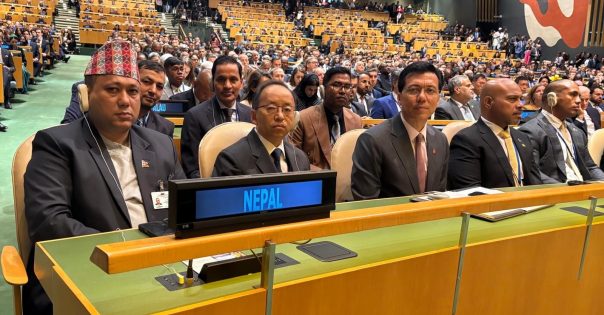
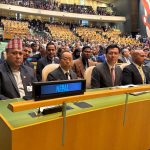
On 17 September the Cabinet approved Prime Minister Balendra Shah’s travel to the United States from 22 to 26 September for the 81st session of the United Nations General Assembly, his first foreign trip since taking office on 27 March. The government had originally planned to send Foreign Minister Shisir Khanal, and revised the plan after the Bhotekoshi disaster so that the prime minister could make Nepal’s case personally. He is scheduled to address the Assembly on 24 September.
That is a strategic choice, and a coherent one. The UN System is where loss and damage, adaptation finance and the treatment of vulnerable mountain economies are actually negotiated into text with legal and budgetary consequence. The universal system is where that transition is managed. BRICS is not.
So, Nepal is not strategically distant from Global South institutions. It is institutionally selective, and its selection favours universal, rules-generating bodies over consensus clubs. The trouble is that this preference has never been articulated by anyone in government. It is revealed rather than declared, which means it reads to domestic critics as drift and to external partners as absence. A doctrine nobody states cannot be defended, funded, or staffed.
What a coherent approach would require
Four things follow, and none of them is a demand for membership.
First, Kathmandu should stop treating BRICS as a single object. Membership, partner status, outreach invitation and technical participation in working groups are four different propositions with four different political prices. Partner status is the only realistic tier, and it carries a feature, Nepali strategists have overlooked: because admission requires consensus among all eleven members, Nepal cannot enter over the objection of either neighbour. Unlike the Millennium Challenge Corporation compact or the Belt and Road Initiative, where Nepal’s choice was itself the signal, a BRICS partnership is structurally incapable of being read as alignment with one neighbour against the other. The bilateral sensitivity that is assumed to counsel caution here is weaker than in almost any other file Nepal handles.
Second, the SAARC chairmanship has become a liability. Twelve years of custody over an organisation that cannot convene is not neutrality; it is a standing advertisement of Nepal’s inability to convert position into outcome. Either Kathmandu invests seriously in a 19th summit, at whatever reduced ambition is achievable, or it should seek an orderly transfer of the chair. Holding it passively costs credibility in every other forum where Nepal asks to be taken seriously.
Third, representation precedes petition. No institutional strategy survives vacant embassies in New Delhi, Beijing and Moscow, and strategizing closing missions in Brasilia and Pretoria while lamenting exclusion from a grouping those capitals helped found is not a sustainable posture. If the closures are genuinely temporary, as the government says, the ministry should say so to the affected states in writing and set a date.
Fourth, Nepal’s strongest claim on Global South institutions is not geography or sentiment. It is evidence. The Bhotekoshi event began across an international border, was reported downstream by Chinese authorities to Nepali police, and destroyed a bilateral trade corridor. It is the clearest recent case anywhere of transboundary cryosphere risk requiring exactly the data-sharing and early-warning architecture the New Delhi Declaration endorses. That is an issue-based entry point, and issue-based entry is the one form of diplomacy at which small states reliably outperform their weight.
Conclusion
A coherent Nepali strategy towards emerging institutions has to reconcile four things that pull in different directions. The economic return from bloc membership is modest and mostly bilateral. Diplomatic autonomy is best protected by consensus formats that cannot be read as alignment. Bilateral sensitivities are real but are weaker in BRICS than in almost any comparable body. And institutional credibility, the scarcest of the four, cannot be borrowed: a state that has not convened the organisation it chairs in twelve years will struggle to persuade anyone that its participation elsewhere would add value.
Nepal’s commentators have spent a fortnight asking whether India left Nepal off a list. The more consequential question is the one nobody in Kathmandu has answered: in an international order that is visibly re-forming around clubs, tiers and coalitions, what is Nepal’s theory of which ones to join, and who in the Nepali state is responsible for having one?
Sources
Primary and official
Ministry of External Affairs / Press Information Bureau, Government of India, BRICS backgrounder and summit materials, September 2026. https://www.pib.gov.in/PressNoteDetails.aspx?NoteId=159946
Government of India, BRICS 2026 Chairship official site. https://www.brics2026.gov.in/about-us/
Ministry of Foreign Affairs, Government of Nepal, “Nepal and Shanghai Cooperation Organization (SCO)”. https://mofa.gov.np/pages/nepal-and-sco-8/
Embassy of Nepal, Beijing, press release on the SCO dialogue-partner memorandum, 22 March 2016. https://mofa.gov.np/content/329/press-release-issued-by-embassy-of4876/
United Nations, LDC Portal, “Nepal graduation status” (graduation scheduled 24 November 2026; General Assembly resolution 76/8). https://www.un.org/ldcportal/content/nepal-graduation-status
Department of Customs, Government of Nepal, foreign trade statistics, as reported in The Rising Nepal, “Nepal bears deficit with 128 nations”, 8 August 2026. https://risingnepaldaily.com/news/84670
National Planning Commission and National Disaster Risk Reduction and Management Authority, Rapid Damage and Needs Assessment, reported 10-11 September 2026.
Journalism and analysis
Al Jazeera, “BRICS meets in India: What’s on the agenda, why it matters”, 12 September 2026. https://www.aljazeera.com/news/2026/9/12/brics-meets-in-india-whats-on-the-agenda-why-it-matters
The Kathmandu Post, “Rs723 billion needed to rebuild flood-hit areas, government assessment finds”, 10 September 2026. https://kathmandupost.com/national/2026/09/10/rs723-billion-needed-to-rebuild-flood-hit-areas-government-assessment-finds
The Kathmandu Post, “Nepal’s diplomatic reach narrows as key envoy vacancies drag on”, 15 August 2026. https://kathmandupost.com/national/2026/08/15/nepal-s-diplomatic-reach-narrows-as-key-envoy-vacancies-drag-on
The Kathmandu Post, “Brazil concerned over closure of Nepali embassy in Brasilia”, 24 August 2026. https://kathmandupost.com/national/2026/08/24/brazil-concerned-over-closure-of-nepali-embassy-in-brasilia
The Kathmandu Post, “Nepal PM Balendra Shah to address UN General Assembly on September 24”, 5 September 2026. https://kathmandupost.com/national/2026/09/05/nepal-pm-balendra-shah-to-address-un-general-assembly-on-september-24
myRepublica, “Nepal to close three embassies, two consulates under revised economic diplomacy strategy”, 29 May 2026. https://www.myrepublica.nagariknetwork.com/news/nepal-to-close-three-embassies-two-consulates-under-revised-economic-diplom-96-45.html
myRepublica, “Pokharel cites four reasons Nepal was not invited to BRICS”, 14 September 2026. https://myrepublica.nagariknetwork.com/news/pokharel-cites-four-reasons-nepal-was-not-invited-to-brics-98-13.html
Khabarhub, “छिमेकमा ब्रिक्स सम्मेलन: नेपाल न टेबलमा, न मेनुमा?”, 28 Bhadra 2083 (13 September 2026). https://khabarhub.com/2026/13/1024017/
Krishna Prasad Oli, “The Delhi BRICS Summit and what Nepal lost by staying away”, OnlineKhabar English, 14 September 2026. https://english.onlinekhabar.com/delhi-brics-summit-nepal-lost.html
The Wire, “Climate Finance, Adaptation and Disaster Resilience Feature Prominently In BRICS Declaration”, September 2026. https://m.thewire.in/article/environment/climate-finance-adaptation-and-disaster-resilience-feature-prominently-in-brics-declaration
Reuters and Associated Press wire reporting on the 2026 Nepal floods and the swearing-in of Prime Minister Balendra Shah, March and August-September 2026.
Ministry of Foreign Affairs of Brazil, “Vietnam joins BRICS as a Partner Country”, June 2025. https://brics.br/en/news/vietnam-joins-brics-as-a-partner-country